Christmas with Klaus

Advertisements undersell this surprisingly well-crafted animated film.

Klaus

Likes: Blend of traditional and new animation techniques is truly unique.

Dislikes: Pop songs in the soundtrack cheapen the emotional moments.

Bottom Line: It’s on Netflix, why not give it a shot?

3.5 out of 5. ◆◆◆⬖◇

By Jacob Schermerhorn

When I first saw the advertisements for Klaus, I was hesitant. On the one hand, it was packed to the brim with acting talent like Jason Schwartzman, J.K. Simmons, Rashida Jones, Joan Cusack and Norm McDonald. On the other hand, the plot looked hackneyed plus I hate the Panic at the Disco song High Hopes. I was pleasantly surprised to find that Klaus is more impactful and insightful than typical holiday children’s films this time of year. While it might not achieve Christmas classic status, it does represent a significant step up for the genre.

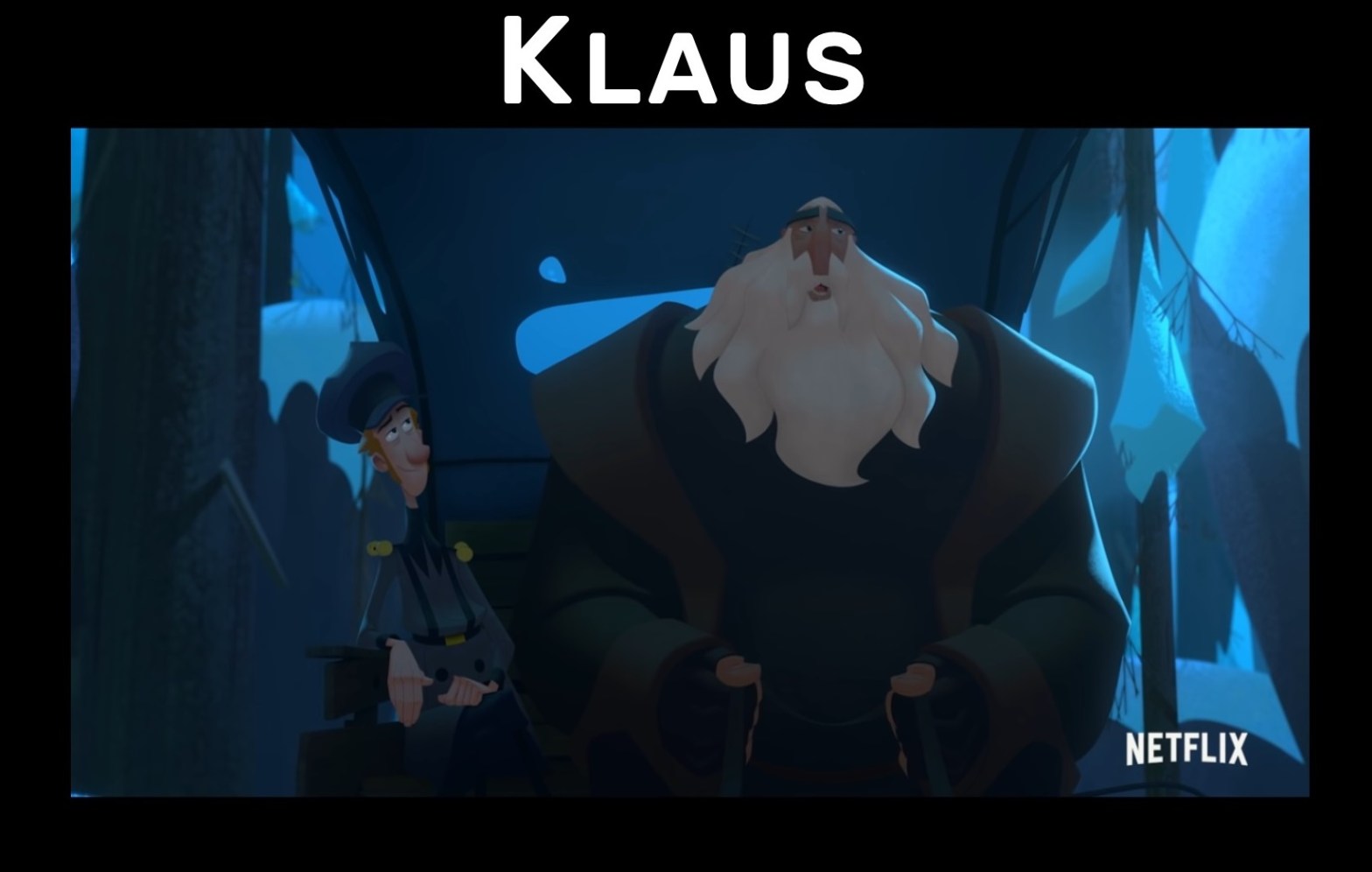
The plot of the film is a successful recipe of The Emperor’s New Groove mixed with Terry Pratchett’s book Going Postal with a dash of The Grinch. Jesper Johannsson (Schwartzman) is the spoiled son of a Scandinavian postmaster general who purposely fails out of postman academy. Believing he will be able to return to his easy life after failing, Jesper’s scheme backfires and his father instead sends him to the distant and hostile island of Smeerensburg. Amid a Hatfield’s and McCoy’s style family feud, Jesper hatches a plot to return home by exploiting the village children’s desire for toys and a burgeoning friendship with the stoic and hermitic woodsman Klaus (Simmons). From that point on, you can see the story’s plot coming a mile away, but that fact does not detract from enjoying the movie.

What is remarkable is how Klaus blends current computer technology such as organic, volumetric, and texturing lighting with traditional hand drawn animation to create smooth and energetic action that also feels weighty and realistic. Additionally, 2D animation can pack a stronger emotional punch than 3D animation (Cough, cough, The Lion King remake) and it was kind of a treat to see this older style again. Director Sergio Pablos and cult-favorite animator James Baxter both worked on Disney renaissance movies such as Aladdin and The Hunchback of Notre Dame and tapped into that experience when creating this movie.

“We are picking up traditional animation where it was left off which was sometime in the nineties,” Pablos said in an interview this year, “Like, in a world where CGI hadn’t been invented, where would traditional animation be today?”

Klaus also represents another milestone by being the first original fully featured animated movie released on Netflix. With a limited theatrical run, it seems the streaming service has high hopes (ugh) for the project, possibly eyeing a best animated nomination come this awards season. Quite honestly, when put against the probable competition of sequels (Frozen II, The Lego Movie 2, The Secret Life of Pets 2, How to Train Your Dragon 3,and Toy Story 4), or remakes (The Lion King and The Addams Family), its inventiveness and originality shines brighter still.
Let Parasite Worm its Way into your Heart

Equal parts humor and thriller in a movie I promise you’ve never seen before.

Likes: The humorous and thrilling aspects hide deep themes of class division.

Dislikes: I don’t mind subtitles personally, but some people don’t like to read

Bottom Line: Let this movie take you for a wild ride.

5 out of 5. ◆◆◆◆◆

By Jacob Schermerhorn

(No worries, this is a spoiler free review!)

I had the pleasure of seeing Parasite in South Korea this summer and even that early, it was evident this movie was going to make waves when it was released to a wider audience. What seems a simple story of low-class hustlers slowly but surely explodes into a full-blown critique of rich versus poor.

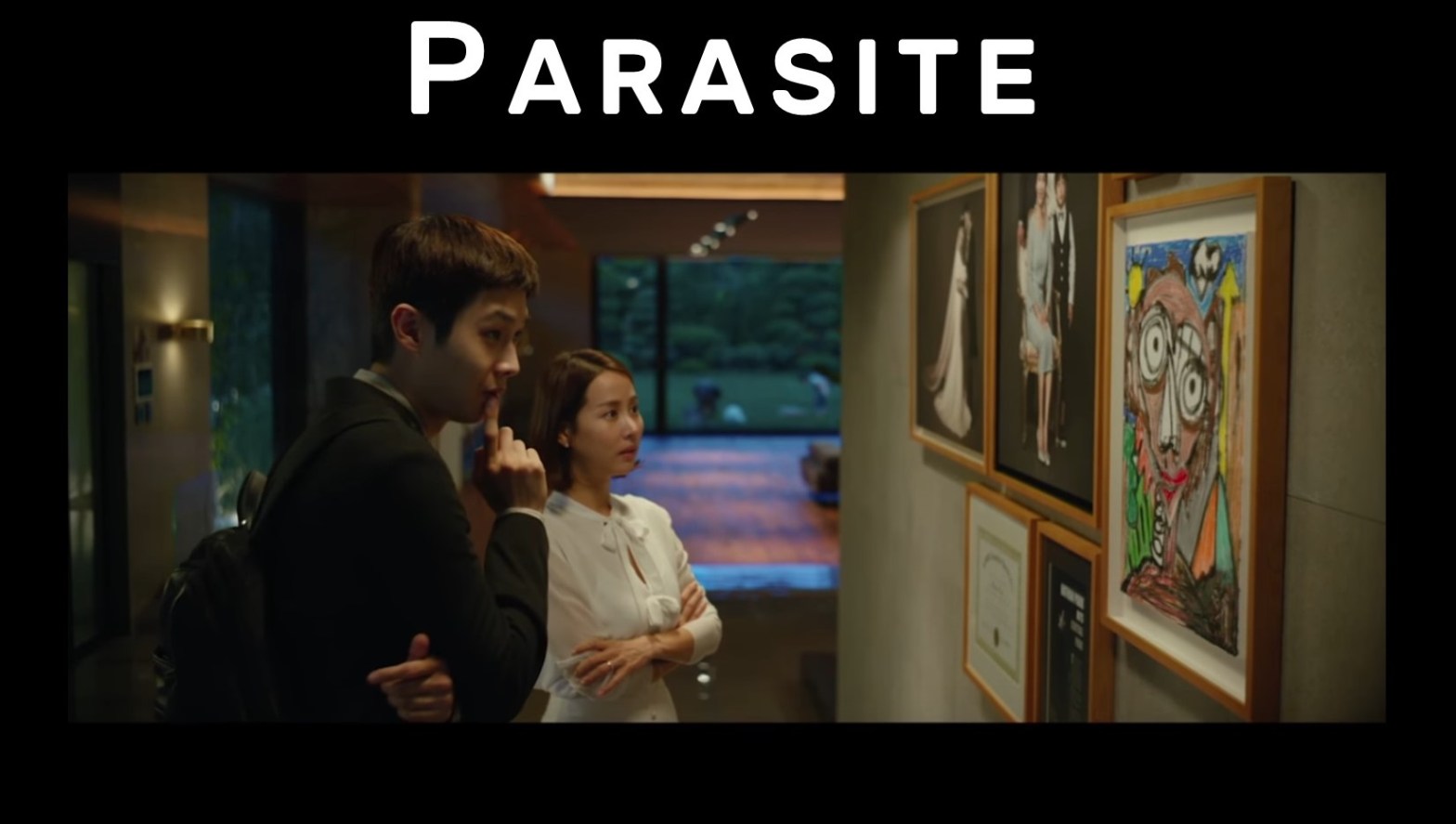
As the movie begins, a college student friend visits the down-on-their-luck Kim family. He comes with an offer to son Ki-woo (Woo-sik Choi): take over tutoring a rich high school girl in English while he is studying abroad. Ki-woo accepts the job and cons his way up the ladder, securing employment for his sister Ki-jung (So-dam Park) as an art teacher, his father Ki-taek (Kang-ho Song) as a chauffeur, and his mother Chung-sook (Hye-jin Jang) as a housekeeper. The scheme is carried out swimmingly and soon the entire family is staying at the house while the rich owners are away. But as events unfold, the Kim family realizes that not all is as it seems.

Without getting into spoilers, this movie is separated into two halves, with the Kim family inserting themselves into the upper-class lifestyle shot like a heist or scam movie. This section contains the most humor with the rich Park family portrayed as easily fooled and out of touch. The Park mother Yeon-kyo (Yeo-jeong Jo) is particularly convincing as a useless, bored and emptyheaded but also sympathetic housewife. The latter half of the film is a thrill ride that takes viewers through a nail-biting climax. Be prepared to be unprepared for the twists. The best part about this is that both halves are shot with deceptive efficiency and grace. (Keep an eye out for lines that divide the frame between characters and what that might mean about these characters.)

Again, without spoiling events, Parasite is clearly about class conflict and rich versus poor. However, its thesis about that topic is less clear. Snowpiercer, director Bong Joon-Ho’s 2014 film, laid out a clear villain with its upper-class train passengers. However, Parasite does not demonize the rich or poor and instead creates three-dimensional, if admittedly dramatic characters. Because of that, the movie sticks with you long after you see it.

Thinking ahead to awards season, it is easy to see this movie get nominated for best foreign film. What remains to be seen is if it can be a best picture nominee. Roma most recently achieved a nomination in both categories at the Academy Awards, perhaps Parasite is next.

A Beautiful Day at the Movies

Because that’s the thing, right? Fred Rogers was a weird guy.

Likes: The weirder choices in this film keep it from becoming too saccharin.

Dislikes: More examination of Mister Rogers and his mystique please.

Bottom Line: Come for Mister Rogers, stay for Fred.

3.5 out of 5. ◆◆◆⬖◇

By Jacob Schermerhorn

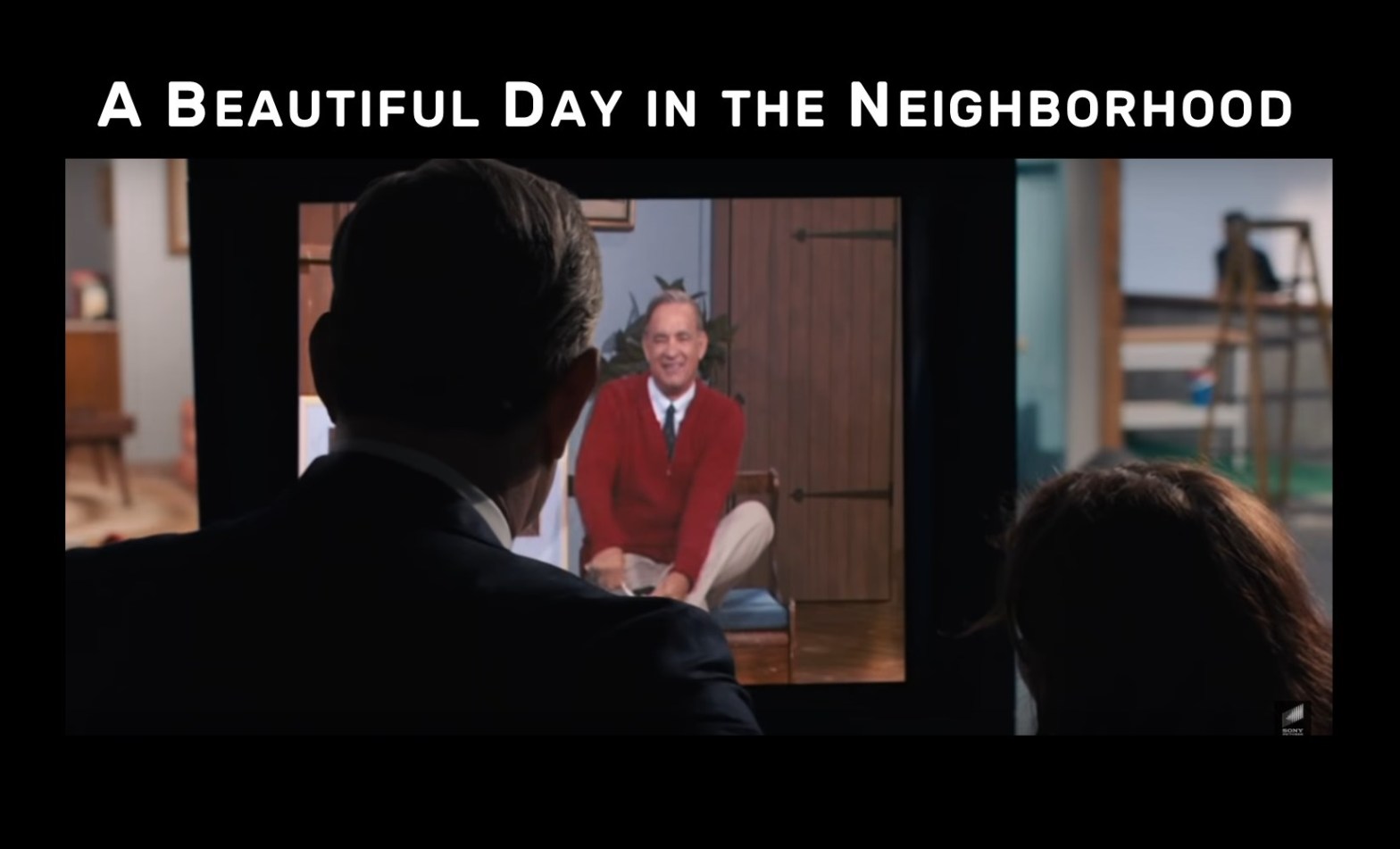
Let’s get one thing out of the way first and foremost. A Beautiful Day in the Neighborhood is not a biopic of Mister Rogers and thank god for that because it is much more interesting than a standard biography. If dates and facts are what you’re looking for, go watch the fantastic documentary Won’t You Be My Neighbor? instead.

This movie, on the other hand, is a fictionalized version of journalist Tom Junod writing a expose on the children’s television star Mister Rogers. The journalist we get in this version is Lloyd Vogel (Matthew Rhys) who, helped by Mister Rogers (Tom Hanks), must overcome a years-long rift with his dying father (Chris Cooper). Vogel, initially the classic hardnosed reporter, is first frustrated by Rogers, then intrigued, then finally accepts the philosophy of the soft-spoken man.

The threshold for whether you will enjoy or hate A Beautiful Day in the Neighborhood comes early in the film. To anyone familiar with Mister Roger’s Neighborhood, the movie’s opening scene places us smack dab in the middle of the old television show with the flat lighting and a multicam setup reminiscent of the 1990’s. Mister Rogers, addressing the audience as his “neighbor” all the while, takes off his coat and shoes, puts on an iconic red cardigan and sneakers, and introduces us to a picture box. With the picture box, Mister Rogers opens the frames to familiar faces like Lady Aberlin and King Friday. But the third box opens instead on a jarring image of Vogel with a bloody gash down his face. It is at that moment that a viewer realizes that something weird is going on in this movie.

The calming tones and simple speech of Mister Rogers coupled with the gentle music and presentation of this opening scene lulled me into a sense of security that the third picture immediately broke. The juxtaposition of Mister Roger’s soothing world with a very real and violent image was powerful. If you like the unease that comes with that stark contrast, then this is a movie you will enjoy as the film revisits and really thrives in those strange surreal moments. They exist in important scenes like when Vogel finally confronts his inner conflict, but also in transitions with miniatures of Pittsburgh and New York City, with planes, cars and even a hearse.

Because that’s the thing, right? Fred Rogers was a weird guy. He brought out these dusty puppets and talked in silly voices even when he was with adults. He took pictures of people he met during the day to show to his wife. He was supposedly 143 pounds for his entire adult life. (143 being code for “I love you”) He acted like a child but in the body of an old man. The film reflects the oddity of Fred Rogers with this contrast but rarely gives us a look behind the figure. When Vogel asks Rogers the tough adult questions, like “Does your position burden you?”, the television star dodges and deflects with childlike behavior or posing questions to Vogel instead.

It is frustrating to watch but maybe that’s the point. Fred was not perfect or a saint, his own wife said as much. He had to work to become graceful. So those moments where we do get a glimpse at Fred instead of Mister Rogers are all the more precious because of that.

Jojo Rabbit thinks Hitler is a Laughing Matter

And I agree. Let’s dance and laugh to this charming movie.

Likes: Taika Watiti’s unique voice is both hilarious and heart tugging.

Dislikes: Adult Nazi redemptive arc muddies the thematic waters a bit.

Bottom Line: Guys, it’s okay to laugh at Hitler. He’ll get over it.

4.5 out of 5. ◆◆◆◆⬖

By Jacob Schermerhorn

Two years ago, the internet asked if it was okay to punch American Nazi, Richard Spencer. There are many opinions on both sides of that argument and I personally don’t feel comfortable wading into that complicated issue. However, one thing I hope we can all agree on is that Nazism is evil and deserves to be ridiculed as the hate-filled bile it is. If you agree with those statements, if you think movies like Charlie Chaplin’s The Great Dictator and Mel Brooks’ The Producers are triumphs, then I’m happy to say that you will enjoy Jojo Rabbit.

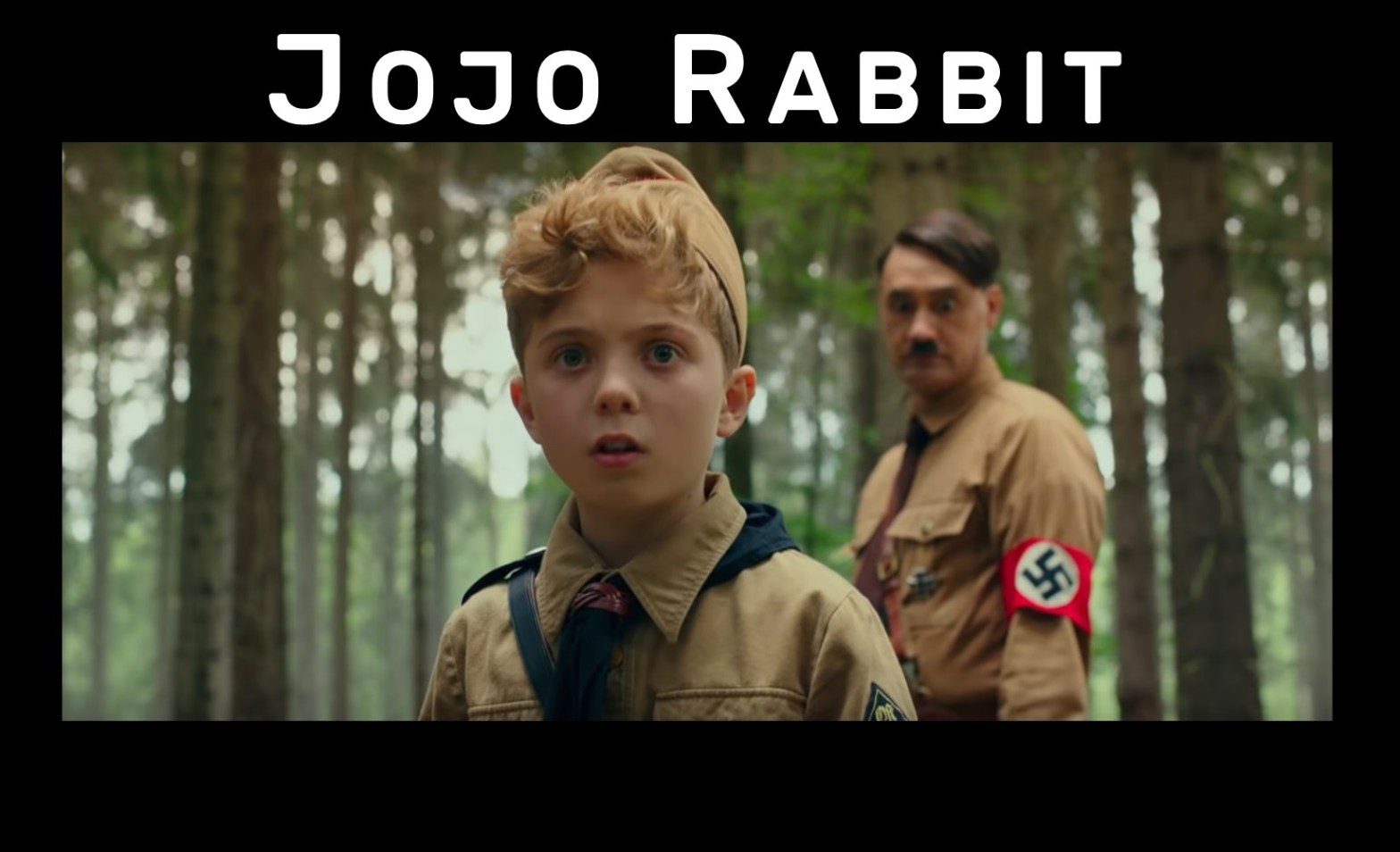
Taika Watiti’s sixth directorial effort is based on the book Caging Skies by Christine Leunens. It sees Watiti’s uniquely comedic voice satirize the Nazi ideology through the protagonist, Johannes “Jojo” Betzler (Roman Griffin Davis). Jojo is a typical ten-year-old: he is still learning how to tie his shoes, he is excited to go to Nazi youth camp (framed like fun summer vacation), and he has a goofy imaginary friend who happens to be Adolf Hitler (Taika Watiti). When an accident with a grenade leads Jojo to spend the rest of the summer at home, much to his and imaginary Hitler’s dismay, he discovers his mother Rosie (Scarlett Johannson) is hiding a Jewish girl Elsa (Thomasin McKenzie). When discovered, Elsa makes it clear that if Jojo reveals her, he and his mother will go down with her. The internal conflict of Jojo struggling with his propaganda-brainwashed mind and his desire to protect his mother becomes the film’s central tension which is backdropped against a provincial German town preparing for a world war that is clearly winding down.

As one might expect given Watiti’s other deeply humanistic films, Jojo ultimately chooses love and empathy over hatred and prejudice. Jojo’s fervent patriotism is clearly illustrated as the desperate longing for acceptance that comes from being an isolated and unpopular child, not as a true commitment to evil. As Elsa says: “You’re not a Nazi, Jojo. You’re a ten-year-old kid who likes dressing up in a funny uniform and wants to be part of a club.”

In the way that, as Jojo rejects Nazism, he becomes more humane, most of the adults in the movie trend in the opposite direction. As they become more entrenched in Hitler’s ideals, their mannerisms become more childish as if to reflect how their ideology is also that childish. Summer camp instructor Fräulein Rahm (Rebel Wilson) spouts ridiculous rumors about Russians and Jews like a kindergartener might to school chums on a bus. Nazi soldier Captain Klenzendorf (Sam Rockwell) uses colored pencils to obsessively design an outrageous uniform complete with Gatling gun and radio emitter that will disrupt enemy morale with loud music. The gestapo agent Deertz (Stephen Merchant) is equal parts cloying but frighteningly intimating and petty as a bureaucratic busybody. However, no character is more shown to be idiotic and childish than Jojo’s imaginary friend Hitler. The dictator, part inner monologue, part inner demon, is played with skill and nuance by Watiti himself. The gimmick never gets old as Waitiki infuses Hitler with a buffoonish nature and some great one-liners. (One moment that especially got me was Hitler proclaiming, “None of this should be weird!” while lying in Jojo’s bed with the covers tucked up to this chin.) However, it is also clear that Hitler is not just a buffoon, but also a terrifying tyrant. As the film progresses and Jojo finds his empathy, Hitler slowly reveals his true colors.

While Jojo Rabbit is definitely hilarious, do not be mistaken by thinking this film is making light of a tremendous tragedy. In a recent Vanity Fair video with actor Stephen Merchant, Watiti said: “What irks me is people who say that comedy is not an effective tool or something to not be taken seriously as an art form. It’s one of the most powerful tools we have to fight against oppression and bigotry and intolerance. It’s to make fun of and poke holes in these belief systems and people who promote hate.” The laughter here in the film is not to diminish the Nazi’s inhumane acts, but to acknowledge the absurdity of their ideas. As the movie itself says: “Dancing is for people who are free.” So let us dance and laugh to this exceptional tour de force of a film.

Zombieland Doubletap is searching for Brains

With less nuance than the first movie, the sequel can still be a good time when it embraces its bizarreness

Zombieland 2: Doubletap

Likes: Zany weird comedic bits and zombie killing action.

Dislikes: One note characters that are stuck in a 2009 mindset.

Bottom Line: I mean it’s a sequel to a movie that came out ten years ago. In a way, what did we all expect?

2.5 out of 5. ◆◆⬖◇◇

by Jacob Schermerhorn

When Zombieland premiered in 2009, it was a different time for film. Avatar surpassed Titanic at the box office with over two billion dollars, Joker director Todd Phillips was still the guy who directed the first Hangover movie, Katheryn Bigelow became the first female director to win an Oscar for The Hurt Locker, and Jesse Eisenberg starred in not one, but two movies with the antecedent of “-land.” (Anyone remember Adventureland?) The most recent prominent zombie movie back then was 2004’s Shaun of the Dead, another comedy poking fun at horror tropes just like 2009’s Zombieland.

Ten years later, in 2019 things have changed.

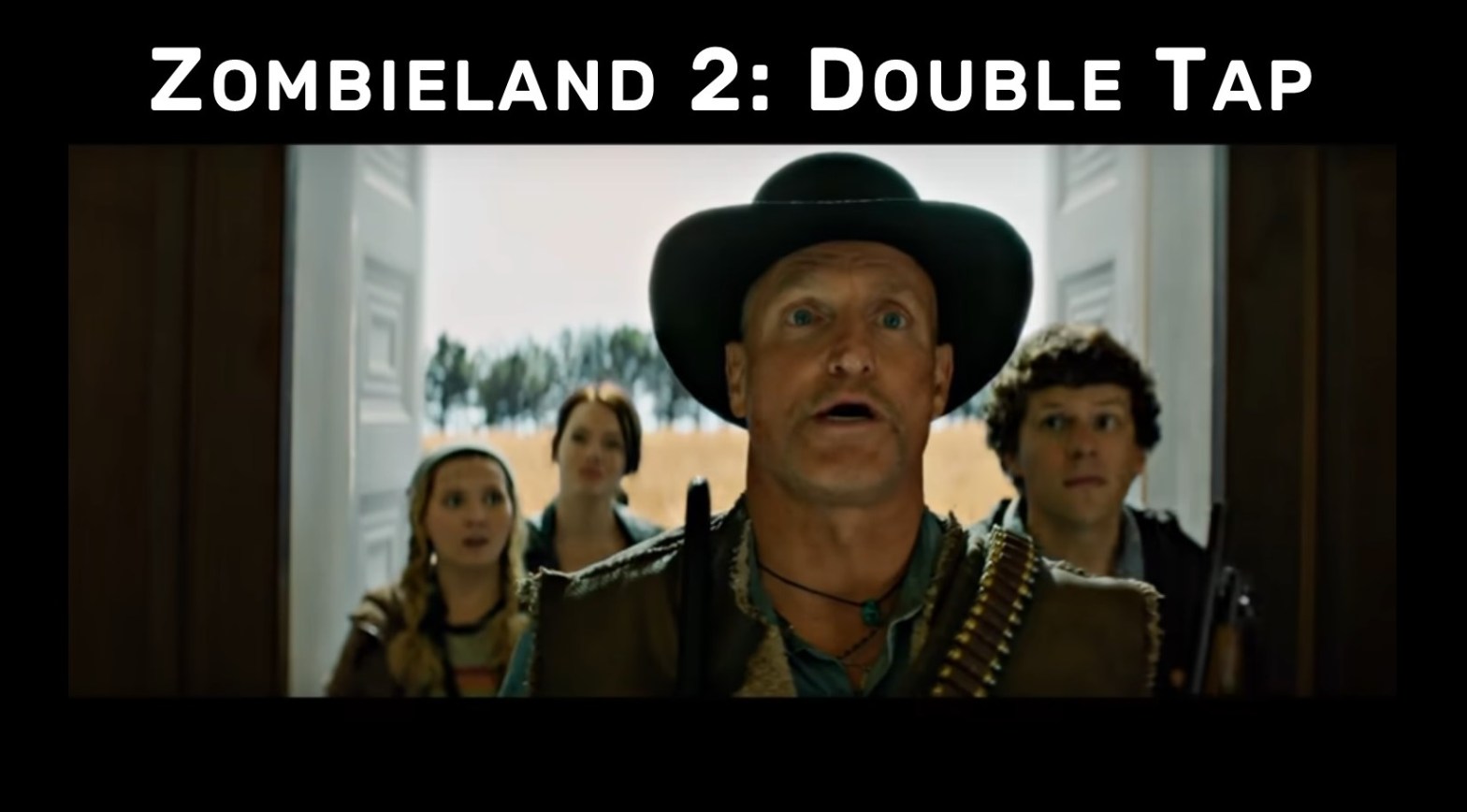
Eisenberg’s Zombieland Doubletap character Columbus acknowledges the huge gap in time by questioning why the audience is even listening to him during the opening monologue. Through that voiceover, we are caught up with the characters from the first movie, the gun-toting macho-man Tallahassee (Woody Haralson), no-nonsense buzzkill Wichita (Emma Stone), and her now late “teenageish” sister Little Rock (Abigail Breslin).

We find the gang settled down at the White House primarily because of Columbus’ desire for domesticity. Columbus’ push his efforts toward a home life further when he asks Wichita to get married. She reacts badly to the proposal and takes off with Little Rock who is dealing with the overbearing father figure of Tallahassee. What follows is the kind of expected road trip movie to Graceland and a hippie commune named Babylon filled with the requisite goofy hijinks and zombie splattering kills.

Along the way, the main gang meets up with some new side characters. Madison (Zoey Deutsch) is a ditzy blonde who drives a further wedge between Columbus and Wichita as the “obviously a bad fit” rebound girlfriend. Nevada (Rosario Dawson) survives the zombie apocalypse in an Elvis-themed tourist trap and forms an eyerollingly-instant romantic connection with Tallahassee. Berkeley (Avan Jorgia) is a hypocritical hippie slimeball who enchants Little Rock by claiming songwriting credit for Bob Dylan’s catalog while criticizing Elvis for stealing from black artists.

Unfortunately, these new characters never evolve beyond one-note. Madison is stupid and will always get them into trouble, Nevada is a badass lady with a big gun, and Berkeley is a performatively woke coward. Their stories of survival would be intriguing (Did Madison survive just by eating Pinkberry for ten years? How did Nevada end up in Graceland and why does she like Elvis so much? What on earth does Berkeley’s “conflict avoidance” look like in the face of zombie hordes?)

But for some reason Zombieland Doubletap is not interested in their stories. In the first Zombieland, Tallahassee achieved true three dimensionality when Columbus discovered that his friend was not grieving for a dead puppy, but a dead son. Tallahassee wasn’t just a loud and violent redneck, he was a hurt and mourning father. Too bad Madison, Nevada and Berkeley are not given that same chance to be real people.

However, putting aside character development, this movie shines when it dips into the zany and bizarre. One-note characters who require no humanizing development are Albuquerque (Luke Wilson) and Flagstaff (Thomas Middleditch). These two survivors are brief bright spots as bizzaro world alternates for Tallahassee and Columbus. It’s a treat to see these four skilled actors butt heads aggressively and passively as they stare into a fun house mirror. Perhaps because he’s already been at it for years on Silicon Valley, Middleditch is doing especially great work with a spot-on Eisenberg impression.

Moments like those, or a random takedown of the concept of Uber while roadtripping, or a mid-credits scene with a favorite celebrity killing zombies, are what make Zombieland Doubletap worth it. As Columbus’ rule 32 states: “Enjoy the little things.”

Welcome traveler!

Who is me?

Finding the Answers to Life…Poorly!

— Real Human Bings

In Winter 2019, I looked at the world and what I saw disturbed me. There were a lack of opinions about movies in the world! Setting to work at once, I sought to rectify this travesty and started a blog with my very important reviews.

(Which I wrote for my college newspaper so yes this is just a shovelware site… But nevermind that!)

And I am happy to say that now that with my unique perspective on films, the field of movie criticism has definitively been saved. You’re welcome world.

Even with the world saved, I must continue my quest and will keep writing about movies. Inspired by my award-winning podcast Real Human Bings which dear reader, I am certain you are a big fan, I will endeavor to find the answers to movies but poorly every step of the way.

Thanks XOXO

Jacob

Design a site like this with WordPress.com
Get started