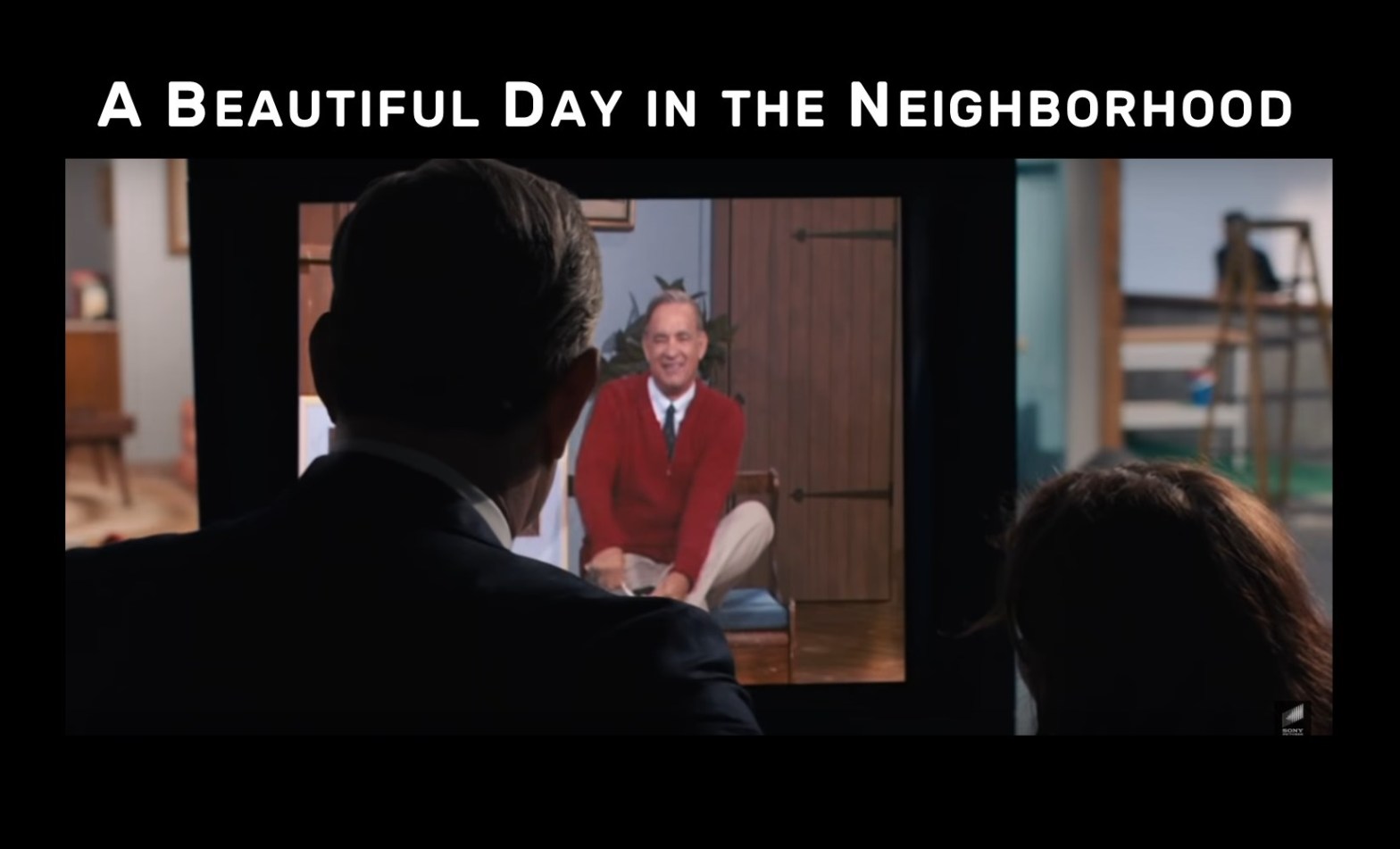
Because that’s the thing, right? Fred Rogers was a weird guy.
Likes: The weirder choices in this film keep it from becoming too saccharin.
Dislikes: More examination of Mister Rogers and his mystique please.
Bottom Line: Come for Mister Rogers, stay for Fred.
3.5 out of 5. ◆◆◆⬖◇
By Jacob Schermerhorn
Let’s get one thing out of the way first and foremost. A Beautiful Day in the Neighborhood is not a biopic of Mister Rogers and thank god for that because it is much more interesting than a standard biography. If dates and facts are what you’re looking for, go watch the fantastic documentary Won’t You Be My Neighbor? instead.
This movie, on the other hand, is a fictionalized version of journalist Tom Junod writing a expose on the children’s television star Mister Rogers. The journalist we get in this version is Lloyd Vogel (Matthew Rhys) who, helped by Mister Rogers (Tom Hanks), must overcome a years-long rift with his dying father (Chris Cooper). Vogel, initially the classic hardnosed reporter, is first frustrated by Rogers, then intrigued, then finally accepts the philosophy of the soft-spoken man.
The threshold for whether you will enjoy or hate A Beautiful Day in the Neighborhood comes early in the film. To anyone familiar with Mister Roger’s Neighborhood, the movie’s opening scene places us smack dab in the middle of the old television show with the flat lighting and a multicam setup reminiscent of the 1990’s. Mister Rogers, addressing the audience as his “neighbor” all the while, takes off his coat and shoes, puts on an iconic red cardigan and sneakers, and introduces us to a picture box. With the picture box, Mister Rogers opens the frames to familiar faces like Lady Aberlin and King Friday. But the third box opens instead on a jarring image of Vogel with a bloody gash down his face. It is at that moment that a viewer realizes that something weird is going on in this movie.
The calming tones and simple speech of Mister Rogers coupled with the gentle music and presentation of this opening scene lulled me into a sense of security that the third picture immediately broke. The juxtaposition of Mister Roger’s soothing world with a very real and violent image was powerful. If you like the unease that comes with that stark contrast, then this is a movie you will enjoy as the film revisits and really thrives in those strange surreal moments. They exist in important scenes like when Vogel finally confronts his inner conflict, but also in transitions with miniatures of Pittsburgh and New York City, with planes, cars and even a hearse.
Because that’s the thing, right? Fred Rogers was a weird guy. He brought out these dusty puppets and talked in silly voices even when he was with adults. He took pictures of people he met during the day to show to his wife. He was supposedly 143 pounds for his entire adult life. (143 being code for “I love you”) He acted like a child but in the body of an old man. The film reflects the oddity of Fred Rogers with this contrast but rarely gives us a look behind the figure. When Vogel asks Rogers the tough adult questions, like “Does your position burden you?”, the television star dodges and deflects with childlike behavior or posing questions to Vogel instead.
It is frustrating to watch but maybe that’s the point. Fred was not perfect or a saint, his own wife said as much. He had to work to become graceful. So those moments where we do get a glimpse at Fred instead of Mister Rogers are all the more precious because of that.
 Real Human Bing Movie Thoughts